
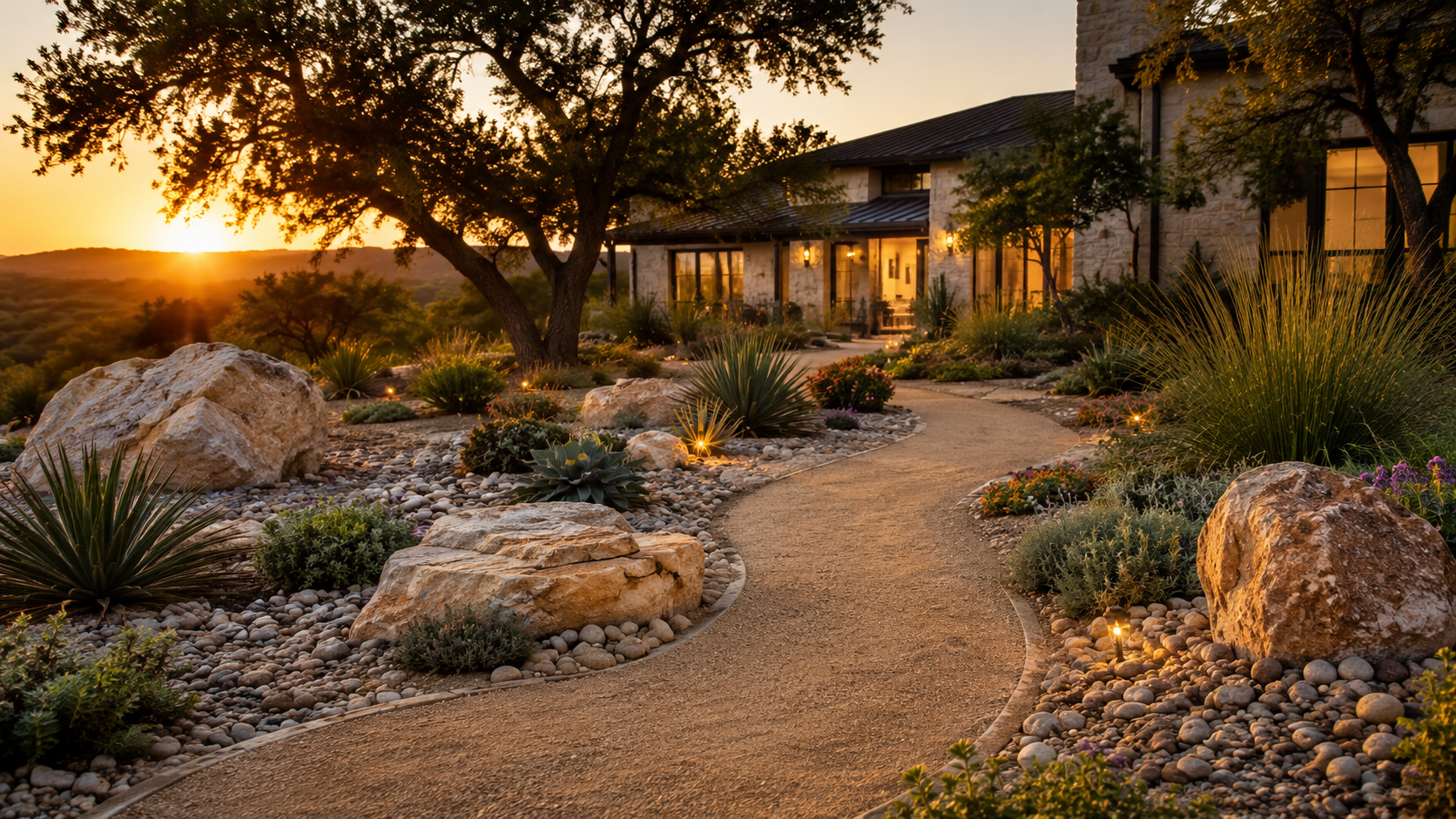
If there is one thing that just makes sense in a Central Texas yard, it is rock. Our heat is brutal, our clay soil is stubborn, and water is not something to waste. Stone and gravel handle all of that. They cut down your watering, they shrug off the heat, they help move water where it should go, and they look good year-round when half the other things in the yard are struggling. We will admit we might be a little biased given our name, but the truth is rock earns its place here.
The catch is that there is a right way and a wrong way to do it. A thoughtful rock landscape looks clean and intentional and lasts for years. A rushed one looks messy and washes out by the next big storm. Here is how to think about it, from the materials to the ideas to the part most people skip.
Why Rock Works So Well Here
Rock does a lot of jobs at once in our climate. It uses no water, so every square foot you cover in stone instead of thirsty grass is money off your summer water bill. It does not fade in the sun, blow away, or need replacing every year the way wood mulch does. It naturally discourages weeds. It slows and channels storm water instead of letting it carry your soil off. And it gives your yard structure and good looks in every season, even the stretches when nothing is blooming.
One honest word, though. Rock is not the answer for the entire yard. A sea of gravel with nothing else looks as bare as the cactus-and-rock cliche people are afraid of. The best yards balance stone with planting, so the rock frames and supports the green instead of replacing it.
Know Your Materials
There is a whole local palette of stone around here, and picking the right one for the job matters. A quick rundown of the ones we use most:
Decomposed granite (DG). This is the Austin classic, the fine, sandy, rustic tan material you see on paths and patios all over town. It compacts into a firm surface, so it is great for walkways, casual patios, and as a ground cover around plants. Just know its quirks: it erodes without good edging, it can track indoors if you put it right by a door, and it needs a refresh now and then.
Gravel. Pea gravel and Texas black basalt are workhorses for beds and ground cover. Basalt is a dark, sleek stone that turns nearly black when wet and gives a modern, high-end look, while pea gravel reads softer and more natural. Both drain well and resist weeds.
River rock and Texas river gravel. These are the smooth, rounded stones, often Brazos or Colorado river gravel, in soft pinks, grays, and browns. They are perfect for dry creek beds, bed borders, channeling water off a downspout, and those shady side yards where grass just turns to mud.
Crushed limestone and flagstone. Crushed limestone is a local, affordable base material and gives a rustic look for drives and paths. Flagstone and natural stone are the premium, structural choice for patios, walkways, and borders, the pieces that anchor a whole design.
Ideas for Putting It to Work
Once you know the materials, the uses open up. A few that work especially well in Central Texas yards:
Pathways and patios. A decomposed granite path winding through the beds, or a flagstone patio for sitting out back, gives you function and beauty without pouring a slab of concrete.
Dry creek beds. A stone-lined dry creek bed is the rare feature that solves a problem and looks great doing it, moving water across the yard while adding a natural design line. If standing water is part of why you are reading this, a dry creek bed is one piece of the answer, and good yard drainage is the rest.
Beds and borders. River rock or gravel makes a clean, weed-resistant alternative to mulch in your beds, and a crisp stone or steel border keeps everything tidy and in place.
The tough spots. That strip between the sidewalk and the street that always burns up from the heat off the concrete, or the shady side yard where grass refuses to grow, are perfect candidates for rock. Stone thrives exactly where turf gives up.
Accents. A few well-placed boulders, grouped in odd numbers and set a third into the ground so they look like they belong, add height and a natural focal point. Pair your stonework with drought-tolerant plants and you get a yard that is both beautiful and built for our climate.
Doing It Right: The Part That Separates Good From Messy
Here is where we see the difference between a rock project that lasts and one that looks rough in a year. It is almost always in the prep.
Edging. Loose materials need a hard edge to stay put. Steel edging is worth every penny, it keeps your gravel from drifting into the lawn and your separate materials from blending into a mess. Skipping it is the most common reason a rock job looks sloppy down the road.
Base and compaction. For any path or patio, you excavate down, lay a proper crushed-stone base, and compact it in layers before the top material goes on. That is what keeps the surface from shifting, sinking, or washing out.
Weed barrier. A good landscape fabric under decorative rock cuts down weeds and keeps the stone from slowly sinking into the soil.
Mind the slope. Storm water will carry loose material downhill if you let it. Building with the yard’s drainage in mind, not against it, is what keeps your gravel where you put it after a hard Texas rain.
None of this is glamorous, but it is the whole difference between a rock landscape that still looks sharp in five years and one you are redoing next spring.
Let’s Build Something
Stone is right there in our name, and it is some of our favorite work. At River Rock Landscapes, we have been building rock and stone into Central Texas yards since 2011, so we know which materials hold up here, how to set them so they last, and how to tie them into the rest of your landscape, whether that is solving a drainage problem, going water-wise with drought-tolerant plants, or building the patio you have been picturing. One crew, one plan, done right from the base up.
If you have a spot in your yard that is begging for stone, or you are just tired of fighting grass where it will not grow, reach out for a free walkthrough. Give us a call at (512) 633-4085 and we will help you figure out what would work best on your property.