By the end of a Central Texas summer, a lot of yards look tired. The lawn is browning out no matter how much you water it, the beds need constant attention just to hang on, and the water bill keeps climbing. It can feel like you are pouring money on the ground every week just to keep things alive.
There is a better way to do it, and it is not what most people picture when they hear “drought-tolerant.” Done right, a water-wise landscape stays green and full of color through the worst of the heat, costs a fraction to water, and asks for a lot less of your weekend. Here is how it actually works in our part of Texas.
What “Drought-Tolerant” Really Means
Let’s clear up the biggest myth first. A drought-tolerant or xeriscape yard is not a patch of gravel with a couple of cactus stuck in it. That picture scares people off, and it is just wrong. A well-designed water-wise landscape can be lush, colorful, and full of texture, with flowering shrubs, ornamental grasses, and pollinators moving through it all season. The difference is that every plant in it is chosen to thrive in our heat and soil instead of fighting them.
It matters here more than almost anywhere. Central Texas summers are long, hot, and dry, and during those months a big share of a home’s water use goes straight to the yard. Plant the wrong things and you spend all summer trying to keep them alive. Plant the right things and the yard mostly takes care of itself. Lower bills, less work, and a landscape that looks better, not worse, when July hits.
Start With the Right Plants in the Right Spots
The foundation of a water-wise yard is simple: pick plants built for this climate, and group them by how much water they need. Put the toughest, most heat-loving plants in the hottest, driest spots, and save the areas that hold a little more moisture for the ones that want it. That grouping is what keeps you from overwatering half the yard just to satisfy the other half.
Central Texas is loaded with beautiful plants that do exactly this. A few worth knowing:
For flowering shrubs and color, Texas sage, autumn sage, salvia, rock rose, and lantana bloom through the heat and barely ask for water once they are settled in.
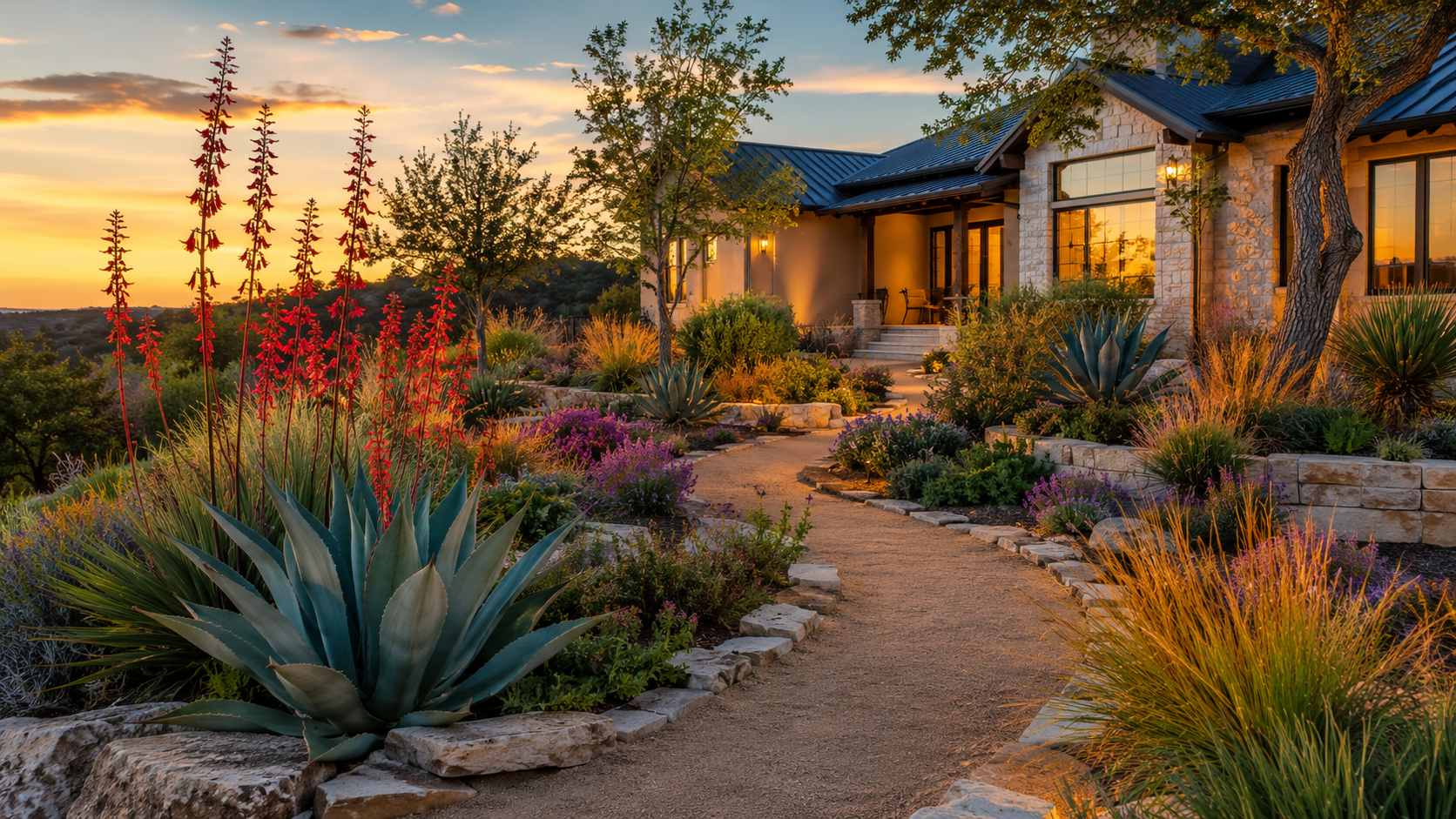
For bold structure, red yucca, agave, and yucca bring shape and drama and shrug off drought completely. Red yucca in particular throws up tall coral flower spikes that hummingbirds love.
For softness and movement, ornamental grasses like Mexican feathergrass and pink muhly add texture and sway in the breeze, and they handle our soil and sun without complaint.
For smaller flowering trees, Texas mountain laurel, desert willow, and Texas redbud all do beautifully here and give you height and shade over time.
You do not have to use only natives. Plenty of adapted plants from similar climates work great too. The key is matching each plant to your specific sun and soil, then grouping the ones with similar needs together.
Let Stone Do Some of the Work
Here is the part a lot of plant-focused advice skips, and it is one of our favorites. A water-wise yard is not just about what you plant, it is about what you build. Stone and gravel pull real weight in a Central Texas landscape.
Decomposed granite and gravel pathways let rain soak through instead of running off, and they never need watering or mowing. Natural stone borders and beds frame your plantings and hold everything in place. A layer of gravel around agaves, yuccas, and other dry-loving plants keeps their crowns dry and happy. And permeable pavers for a patio or walkway handle foot traffic while still letting water filter down to the soil instead of sheeting away.
The best water-wise yards balance planting and stonework, so you get year-round structure and beauty even in the seasons when fewer things are blooming. The stone carries the look while the plants come and go. It is also, not coincidentally, the kind of work we love doing.
Water Smarter, Not More
Even the toughest landscape needs water the right way. A few principles make a huge difference.
Water deeply and less often. Long, infrequent soaks push roots down deep where the soil stays cooler and holds moisture. Short daily sprinkles do the opposite, training shallow roots that fry the moment you skip a day. Deep roots are what let a plant ride out a hot, dry stretch.
Mulch everything. A few inches of hardwood mulch over your beds slows evaporation, keeps soil temperatures down, and smothers weeds. It is one of the cheapest, highest-impact things you can do in a Texas yard.
Use drip irrigation where you can. Drip lines deliver water right to the root zone with almost none lost to evaporation or runoff, which is exactly what you want in this heat. A well-designed system waters efficiently and keeps the right zones getting the right amount, and it is worth setting up properly rather than piecing together.
One honest note: even drought-tolerant plants need regular watering for the first season while their roots get established. Give them that first summer of attention, and most of them will coast on very little after that. And if your yard tends to do the opposite and hold water after heavy rain, that is a drainage issue worth solving too.
The Honest Part: Lower Maintenance, Not No Maintenance
We always level with people on this. A water-wise landscape is far less work than a thirsty St. Augustine lawn that needs mowing and watering every week, but it is not zero work. You will still do some seasonal pruning, pull the occasional weed, and refresh the mulch now and then. What you get back is your weekends, a much smaller water bill, and a yard that looks good instead of stressed when the temperature climbs. For most people that is an easy trade.
Building It Right, Start to Finish
The payoff from a water-wise yard is biggest when the whole thing is designed together, the plants, the stonework, and the watering all planned as one. That is hard to get when you piece it out to different people, a planting here, a patio there, irrigation from someone else. It tends to come together better, and cost less in the long run, when one crew handles all of it with a single plan.
That is what we do at River Rock Landscapes. We have been building landscapes in Central Texas since 2011, so we know which plants thrive here, how to use stone to cut your watering and tie a yard together, and how to set up efficient irrigation to keep it all healthy. We are licensed for irrigation work in Texas, which means the same crew that designs and plants your yard can water it the right way too.
If your lawn is struggling through another summer and you are tired of the water bills, there is a better setup waiting. Reach out for a free walkthrough of your yard and we will show you what a water-wise landscape could look like on your property. Give us a call at (512) 633-4085 anytime.