
If you have lived in Austin for even one summer, you know the pattern. Months of dry heat bake the ground until it cracks, and then a single storm rolls through and drops more rain in an hour than the yard can handle. The water has nowhere to go, so it sits. A day later you still have a puddle in the same low spot, the grass is going soft, and you are starting to wonder if this is normal.
It is common around here, but it is not something you have to live with. Most standing water problems in Central Texas come down to one thing, and once you understand it, the fixes start to make a lot more sense.
Why Central Texas Yards Hold Water
The short answer is the soil. A lot of Austin and the surrounding area sits on heavy clay, the kind of dense, sticky ground that holds together when it is wet and turns to brick when it is dry. Clay is made of very fine particles packed tightly together, so water cannot soak through it the way it would in looser, sandy soil. Instead of draining down, the water pools on top and stays there.
Our weather makes it worse. The long dry stretches leave clay hard and cracked, so when a heavy rain finally comes, a lot of it sheets right across the surface instead of soaking in. Then the ground swells, holds what it does absorb, and lets it go slowly. That is why a yard here can flood fast and stay soggy for days.
There is one more piece a lot of homeowners do not realize. When a house gets built, heavy equipment compacts the soil even further, and the thin layer of topsoil added at the end sits right on top of that hardpan. So a newer home can have just as many drainage headaches as an older one, sometimes more.
The Warning Signs Worth Paying Attention To
Standing water is the obvious one, but your yard usually gives you other clues that water is not moving the way it should. Keep an eye out for these:
A puddle that is still there a full day after the rain stops. If water lingers 24 hours or more, that is a real drainage issue, not just a passing wet spot.
Soft, muddy, or spongy patches of lawn that never quite dry out, even when it has not rained recently.
Mildew, moss, or a musty smell in shaded low areas.
Bare or washed-out spots on slopes, where water running across the surface is carrying your soil away.
Water collecting against the side of the house. This is the one to take seriously, and it deserves its own moment.
Why Water Near Your Foundation Is the One to Worry About
Here in Central Texas, the bigger risk is not the muddy lawn, it is what the water does to your foundation. Clay soil swells when it soaks up water and shrinks when it dries out. When that happens right next to your house, over and over, season after season, it puts uneven pressure on the foundation. That is a big part of why foundation repair is such a common and expensive headache in this part of Texas.
A soggy lawn is annoying. A shifting foundation is a major repair. If you are seeing water pool against the house after storms, that is the kind of thing worth getting ahead of now rather than later.
Why “Just Fixing the Soil” Usually Falls Short
Here is where a lot of well-meaning advice sends people down the wrong path. You will read that you can fix clay drainage by tilling in compost, or adding sand, or spreading gypsum. We want to be straight with you about this.
Working compost into a garden bed does help that bed a little, over time, with a lot of effort. But it is not going to solve a real drainage problem across your yard, and it will not stop water from pooling in a low spot. The clay underneath is still clay.
Adding sand to clay is worse. It sounds logical, loose sand into sticky clay, but in practice the sand fills the tiny gaps between the clay particles and can pack the whole thing down even harder. People end up with denser soil than they started with.
The honest truth is that for an actual drainage issue, you are not trying to fix the soil. You are managing the water. You give it a clear path to somewhere better, and you move it there. That is what actually works, and it lasts.
What Actually Works
Every yard is different, but real solutions almost always start with one of these, and often combine a few.
Grading and slope. This is the foundation of good drainage, and it is the first thing we look at. The ground should slope gently away from your house so water naturally runs off in the right direction. A surprising number of drainage problems trace straight back to a yard that slopes the wrong way or sits dead flat. Sometimes reshaping the grade is the whole fix.
French drains. A French drain is a gravel-filled trench with a perforated pipe at the bottom that collects water underground and carries it away to a better spot. For persistent wet areas in clay soil, this is often the most reliable answer, because it gives the water a fast route out that the soil itself never will.
Catch basins and area drains. These are small grates set into the low points of your yard. Water flows in, drops into an underground pipe, and gets carried off the property. They are great for that one stubborn spot that always ponds, and they tuck in almost invisibly.
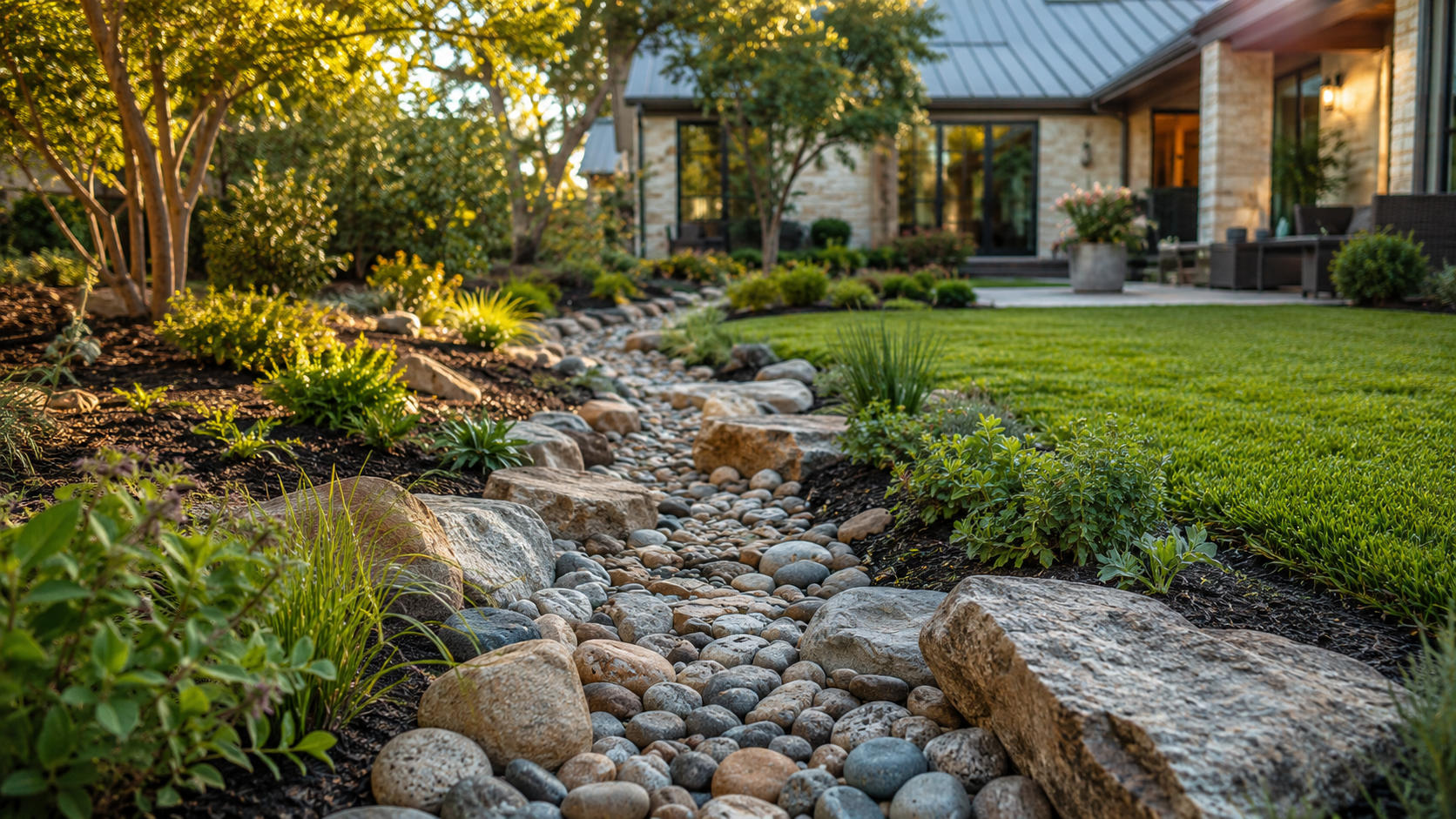
Dry creek beds. A dry creek bed is a stone-lined channel that moves water across the surface and away from where it collects. The nice part is that it does real work and looks good doing it, so it solves a problem while adding something to the landscape instead of hiding underground.
Downspout redirection. Sometimes the culprit is simply your roof. Gutters dumping water right at the base of the house can be rerouted away from the foundation and out to where it belongs, and that alone clears up a lot of problems.
Rain gardens and the right plants. For low areas where added drainage is not practical, a planted rain garden using native, water-tolerant plants can soak up and slow the runoff while looking like an intentional part of the yard. And once your drainage is handled, choosing the right drought-tolerant plants is the other half of a yard built for Central Texas weather.
When You Can Handle It and When to Call Someone
Some of this you can absolutely do yourself. Cleaning out gutters, extending a downspout, clearing a blocked drain, those are good weekend jobs.
The bigger work is where it pays to bring in someone who knows the local soil. Regrading a yard, installing a French drain that actually carries water somewhere useful, solving water against the foundation, this takes the right equipment and a real plan. We have seen plenty of DIY drainage projects that just moved the problem, a French drain that dumps into another low spot, or floods the neighbor, or clogs within a year because it was not built for heavy clay. Digging without knowing where your utility and irrigation lines run is its own risk too.
If the problem is small and contained, give it a try. If it keeps coming back, or it is anywhere near your house, that is the point to get a professional look.
Protecting Your Biggest Investment
Drainage is one of those things nobody thinks about until there is a problem, and then it is the only thing they think about. In Central Texas, getting it right is not just about a tidy lawn. It protects your landscape, your hardscape, and most of all your foundation from the very specific way our clay soil and our storms behave.
At River Rock Landscapes, we have been working with Central Texas soil since 2011, so we know how it moves and where the water wants to go. When we design and build a landscape, we plan the drainage right into it from the start, so it works with your property instead of fighting it. And if you already have a problem spot, we are glad to come take a look and tell you honestly what it will take to fix it.
If standing water has been bugging you, reach out for a free walkthrough of your yard. Give us a call at (512) 633-4085 and we will help you figure out the right fix.